Power Raking vs Dethatching in Colorado: Which One Does Your Lawn Need?
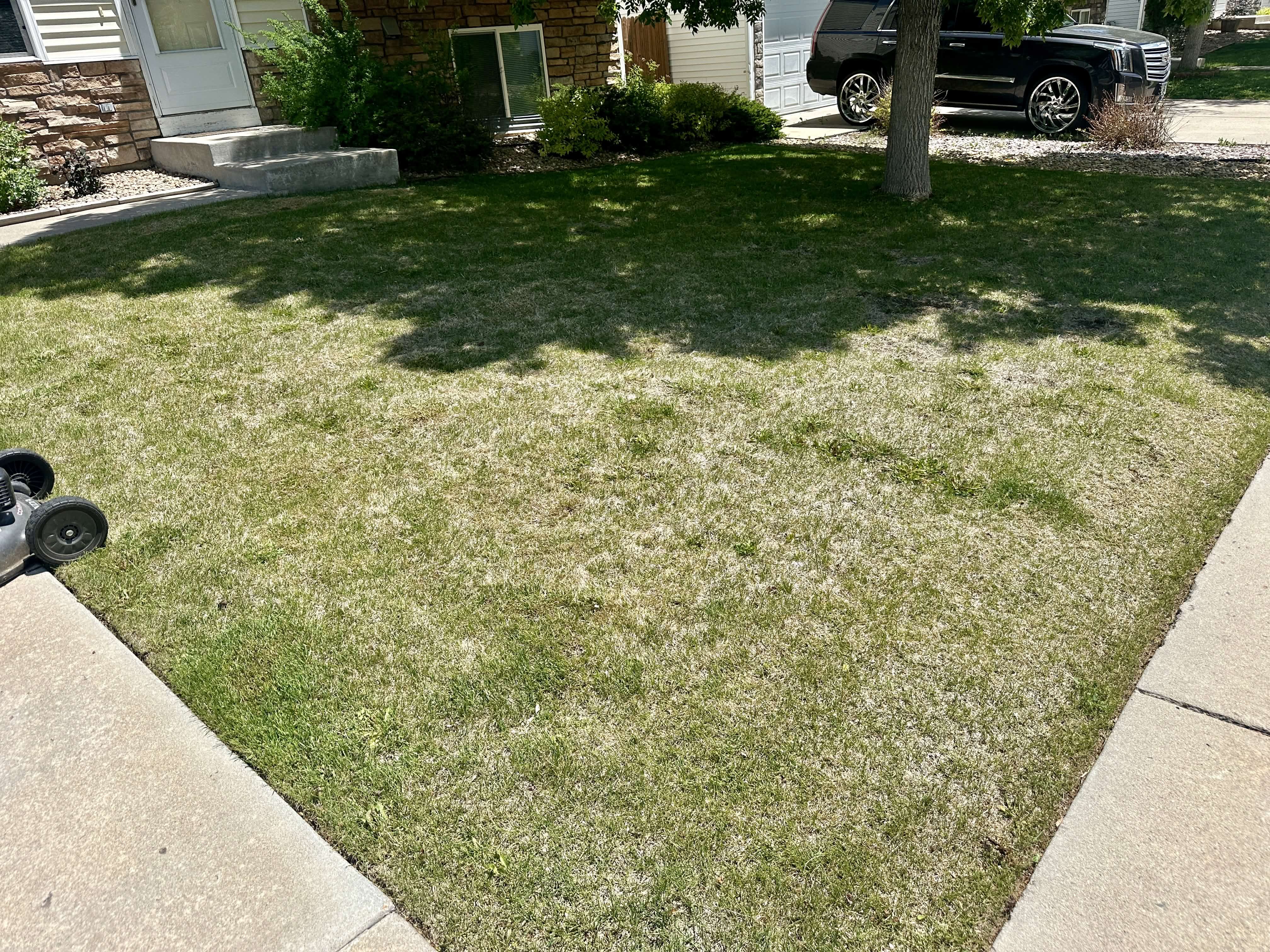
Your grass looks thick from far away. Up close? Water runs off. Fertilizer sits on top. The lawn feels spongy.
That's thatch. And if you've got more than half an inch of it, your lawn is suffocating. Here's how to fix it.
The Difference (It Matters)
- Dethatching uses flexible tines to pull up loose surface debris. It's gentle. Think of it like machine raking.
- Power raking uses rigid blades that slice into the thatch layer and rip it out. It's aggressive and actually solves the problem.
For Colorado clay soil, power raking wins. Our dry climate doesn't break down dead grass naturally, so thatch builds up thick and dense. Dethatching just scratches the surface.
How to Tell You Need It
- Push a screwdriver into your lawn. If it won't go in easily, you have a problem.
- Run your sprinkler for 10 minutes. If water sits on top or runs off, thatch is blocking it.
- Grab a handful of grass and pull gently. If it comes up with shallow roots, thatch has prevented deep growth.
- Look at soil level. If you can't see dirt through more than half an inch of dead material, it's time.
When to Do It
- Best timing: Early spring (March-April), before grass starts actively growing.
- Backup window: Late August-September.
- Never in summer. Heat plus power raking stress kills grass.
- How often: Every 2-3 years for most Colorado lawns.
What to Expect After
Your lawn will look rough for 2-3 weeks. That's normal. By week 4, new growth fills in. By month 2-3, you'll see thicker, healthier grass with way better water absorption.
Pair it with overseeding right after. Exposed soil is the perfect seed bed. Germination rates jump from 30-40% to 70-80% when you overseed after power raking.
Colorado Pro Tip
DIY power raking fails when the blade depth is wrong. Too shallow does nothing. Too deep scalps your lawn. Rental machines are often dull and hard to calibrate. If you're not sure, hire a pro for the first round and maintain it yourself after.
Get your free power raking assessment. We'll tell you honestly if you need it or not.
- Team No Mow Worries