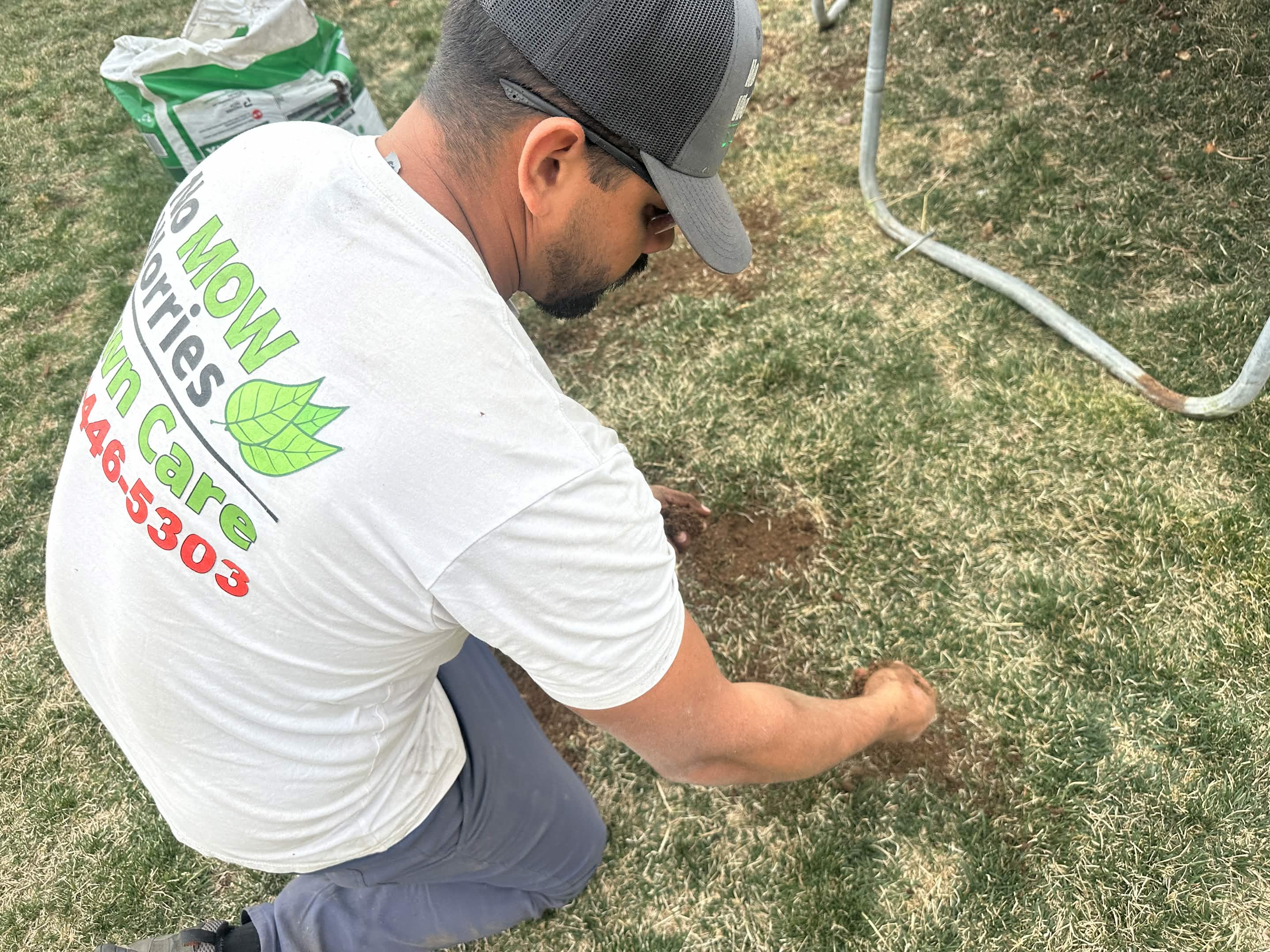
Winter is rough on grass here. We get hard freezes, dry spells, heavy snow, and then the snowmelt that leaves behind dead patches, thatch buildup, and soil compacted tighter than concrete. It's not pretty. But it's fixable if you do things in the right order.
Here's the step-by-step process we follow for our own customers every spring.
Step 1: Wait Until the Timing Is Right
This is the one everyone gets wrong.
You see a warm week in late February and want to get out there. Don't. Aurora's soil needs to actually thaw and stabilize before you work it. If you aerate or power rake while the ground is still frozen underneath, you'll rip up grass crowns and do more damage than the winter did.
The rule we follow: wait until daytime temps are consistently at or above 50 degrees Fahrenheit and overnight lows aren't dropping below freezing. In Aurora, that usually means late March to early April. Some years it's earlier. Some years it's not until mid-April after a late snowstorm.
Watch the two-week forecast, not just today's weather.
Step 2: Power Rake to Remove Thatch Buildup
Thatch is the layer of dead grass, roots, and debris that builds up between your soil and your living grass blades. A little thatch is fine. More than half an inch starts blocking water, nutrients, and air from reaching the roots.
After a long Colorado winter, most Aurora lawns have thatch issues. Power raking pulls that layer out aggressively so the soil can breathe again.
This is usually the first service we do in spring, before aeration or overseeding. There's no point seeding into a thatch-choked lawn.
If your lawn had obvious dead patches or a spongy feel last fall, power raking is worth it. If you already power raked last spring and maintained well, you may be able to skip it and go straight to aeration. Get a free estimate to see what your lawn actually needs.
Step 3: Aerate to Break Up Compacted Soil
Aurora has heavy clay soil. Clay compacts during winter, especially under snow load, and roots can't push through it in spring. Aeration pulls small plugs of soil out of the ground, creating channels for water, fertilizer, and air to reach the root zone.
Spring aeration sets the whole season up. Without it, even the best watering and fertilizing routine underperforms because nutrients can't get in. Severely compacted lawns may benefit from a double pass. We'll let you know if that's the case when we assess your yard.
Step 4: Overseed Thin or Bare Areas
Winter kills grass. It's not a failure. It's Colorado. But those bare patches won't fill in on their own. Overseeding after aeration takes advantage of the open holes to get seed into direct contact with soil, which dramatically improves germination rates.
Cool-season grasses like Kentucky bluegrass and tall fescue germinate well in spring here when soil temps hit around 50–65 degrees. Time it right and you'll see new growth within two to three weeks. For lawns with serious winter damage, we also offer a complete overseed package with starter fertilizer and peat moss.
Step 5: Apply a Spring Fertilizer
After aeration and overseeding, your lawn is ready to absorb nutrients. A spring fertilizer application jumpstarts green-up and supports root development before the heat of summer arrives.
We use a slow-release formula timed to Colorado's growing season. It's not the same thing you'd use in fall. Spring fertilizer is about green growth and recovery, not root storage. Recurring fertilization every 4–6 weeks throughout the season keeps the results going all summer.
Step 6: Hold Off on the First Mow
This surprises people. After all that work, you want to mow immediately.
Wait. Let new grass from overseeding reach at least 3 inches before the first cut. Mowing too early stresses young seedlings and can pull them out before they've rooted. For established grass, wait until the lawn is at least 3.5 to 4 inches tall before the first mow of the season.
When you do mow, keep the blade high (3 to 3.5 inches) for the first few cuts. Scalping a lawn in early spring when it's still recovering is one of the most common mistakes we see.
Step 7: Set a Consistent Watering Schedule
Newly overseeded areas need consistent moisture for the first 2–3 weeks. That means light, frequent watering: twice a day if you can manage it, keeping the top inch of soil damp but not soaked.
Once established, Aurora lawns do well with deep, infrequent watering: about an inch per week, in 2–3 sessions. Early morning is best to reduce evaporation and fungal risk.
Don't rely on Colorado spring rains to do the work. Some years we get plenty. Some years we get a week of warm dry wind right when the lawn needs water most.
The Right Order Matters
Do it out of order and you're wasting money. Power rake first, then aerate, then overseed, then fertilize. Then water consistently and mow correctly. That sequence works every time.
If you're not sure what your lawn actually needs, we're happy to take a look. Some Aurora lawns need the full treatment after a rough winter. Others just need aeration and a fertilizer boost. We don't upsell services you don't need.