The short answer
You can leave some leaves on your lawn over winter, as long as you mow them into small pieces first and can still see grass afterward. What you don't want is a thick, wet layer of whole leaves sitting on the lawn under snow until March. That's how you end up with matted, moldy patches in spring.
I'm Chris, and I own No Mow Worries in Aurora. "Should I leave leaves on my lawn over winter" is one of the top phrases Google suggests for this question, so here's the Colorado answer, based on CSU Extension's advice.
Can I leave leaves on my lawn all winter?
CSU Extension's guidance is to set your mower to its highest setting and make a couple of passes to chop the leaves into small pieces that filter down into the turf. Their test is simple: if you can still see grass after you mow, the layer isn't too thick. Those small pieces break down, feed the soil and earthworms, and help hold moisture for the roots.
When a Larimer County homeowner asked CSU's Ask Extension this exact question, horticulture professor Alison O'Connor answered that you can leave the leaves, but mow them first, because whole leaves can lead to disease and matted turf. CSU's own leaf guide also says not to leave leaf litter sitting on the lawn, both to avoid smothering the grass and to prevent mold and disease.
What happens if leaves stay on the grass under snow?
The big one here is gray snow mold. According to PlantTalk Colorado (CSU Extension and partners), it shows up on Front Range lawns during long stretches of snow cover, and also where leaves and other debris piled up on the lawn during fall and winter. The lawns hit hardest are:
- North-facing lawns
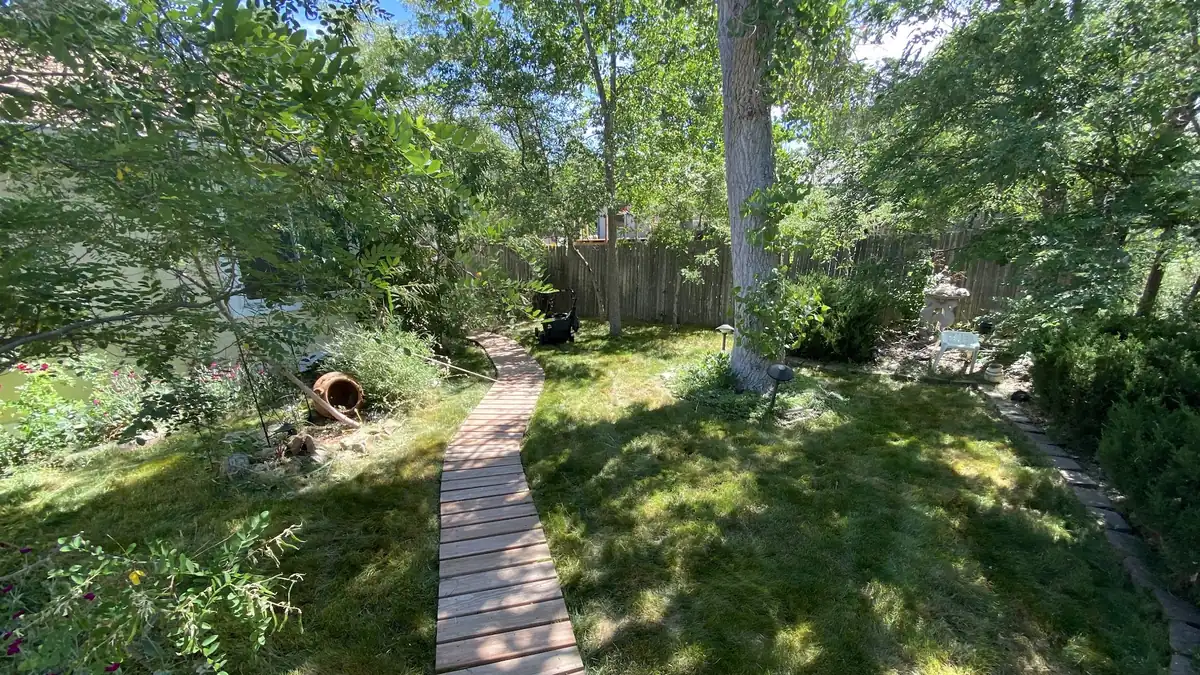
- Shaded lawns, like the backyard under big trees in the photo above
- Spots where drifting or shoveled snow gets especially deep
You'll see it right as the snow melts: round, matted patches about 6 to 12 inches across that look moldy, then fade to tan, gray or white. The good news is it rarely kills a bluegrass lawn. The exception is young grass from a late-fall seeding, which can be killed. If you overseeded this fall, keep leaves off those areas.
CSU says fungicides aren't recommended for snow mold, and spring fungicide won't fix it. Recovery is light raking to dry the patches out, a light spring feeding, and core aeration with overseeding if the area is slow to come back.
How do I mulch leaves with my mower?
This is very doable yourself, and it's free:
- Mow when the leaves are dry. CSU notes mulching works better with dry leaves than wet ones.
- Set the mower high and make a couple of passes.
- Check that you can see grass through the chopped leaves. If you can't, rake or bag the extra.
- Keep your normal mowing height. CSU recommends 2.5 to 3 inches year-round and says there's no need to mow shorter in fall.
Over time this pays off. CSU cites Michigan State research where mulching leaves into the lawn for three years led to a near elimination of dandelions and crabgrass, and Purdue research showing it doesn't add thatch, increase disease or change soil pH.
One caution: CSU says oak and cottonwood leaves are high in tannins and slow to break down, so chop them well and use them in small amounts.
When should leaves be raked or removed?
Mulching has limits. I'd rake or have them removed when:
- You still can't see grass after a couple of mower passes.
- Leaves are wet and matted along fences, under shrubs, or on the north side of the house.
- The lawn is shaded or gets deep drifts.
- You seeded or overseeded this fall.
The extra leaves don't have to go to the landfill. CSU suggests whole leaves for compost, chopped leaves as mulch in garden beds, or 3 to 6 inches of shredded leaves around tender plants inside a wire cage.
What not to do: blow them into the street. CSU Extension says lawn clippings and leaves blown or swept into the street are a major source of phosphorus pollution in urban lakes and streams.
When is the best time for a fall leaf cleanup in Aurora?
Aurora's trees drop leaves from September through November, so the best time for a final cleanup is after most of them are down and before snow settles in for good. Our leaf cleanups are scheduled in November. If you have a lot of mature trees, we can set up more than one visit so the lawn doesn't sit under a thick layer while you wait for the last tree to finish.
While you're thinking about it, CSU says a fall ("winterizer") fertilizer doesn't cause snow mold, and actually helps lawns recover from it. Make the last fall feeding while the grass is still green, at least two to three weeks before the ground freezes.
Want us to handle the leaves?
If raking isn't how you want to spend your November weekends, add Leaf Clean Up on our quote form. We clear leaves and debris from the lawn and beds and haul everything away, and we'll confirm your date and price. You can read more about our fall cleanup service. We're rated 4.9 on Google from 77 reviews (as of October 2026).
Common questions
A light layer that's been mowed into small pieces is fine and adds nutrients. CSU Extension's test is whether you can still see grass after mowing. Thick, whole leaves should come off before snow.
They can contribute. PlantTalk Colorado says gray snow mold develops under long snow cover and where leaves and debris pile up on the lawn in fall and winter, especially on shaded and north-facing lawns.
Mulch them with the mower when the layer is light and dry. Rake or bag the extra when the grass is buried, the leaves are wet and matted, or the area was seeded this fall.
If you can't see grass after a couple of passes with the mower on a high setting, there are too many. Remove the extra or move it to compost or garden beds.
No. CSU Extension says leaves and clippings in the street wash into storm drains and are a major source of phosphorus pollution in local waterways.
Our leaf cleanups are scheduled in November, and properties with lots of trees can get more than one visit. Request one on our quote form and we'll confirm your date and price.
Sources
- CSU Extension, How to mow, compost, and mulch leaves (Nov 2024)
- Ask Extension #855207, Rake up my leaves or leave them on the grass? (CSU, Larimer County)
- PlantTalk Colorado 1543, Gray Snow Mold in Lawns
- CSU Extension, Basic Turf Management (GardenNotes #551)
- No Mow Worries fall cleanup page