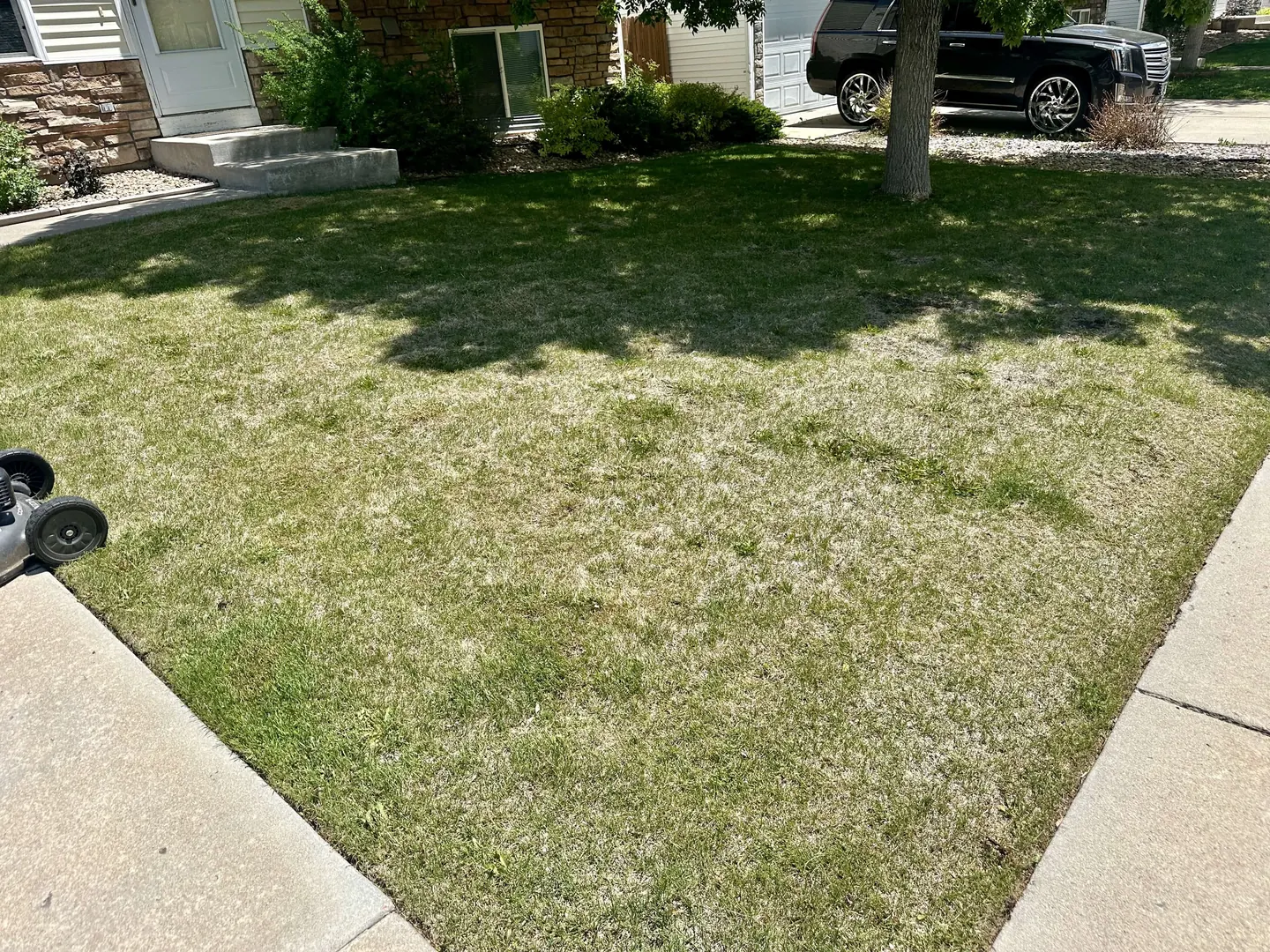
Why Colorado Lawns Need Power Raking
Colorado bluegrass is a thatch machine. Our dry winters, clay soil, and intense UV create conditions where dead grass accumulates faster than it breaks down. By spring, many Front Range lawns have half an inch or more of matted thatch sitting between the green blades and the soil.
That thatch layer blocks water from reaching roots. It traps disease and insects. And it prevents fertilizer from doing anything useful. Power raking strips it out mechanically so your lawn can actually breathe.
When to Power Rake Along the Front Range
Timing is everything. In the Denver metro, Aurora, and Centennial areas, the window is typically late March through mid-April. You want to power rake when:
- Grass is starting to green up but has not hit peak growth
- Soil has thawed and dried enough to handle equipment
- Daytime temps are consistently above 50 degrees
- Before you apply pre-emergent weed control
Power raking too early (while soil is still frozen or soggy) tears up roots. Too late (May or later) and you stress the lawn right when it needs energy for summer.
Power Raking vs Dethatching: They Are Not the Same
People use these terms interchangeably, but they are different tools for different problems.
Power raking uses rotating blades to aggressively cut through and lift thatch. It goes deeper and removes more material. This is what most Colorado lawns need after winter.
Dethatching uses spring tines to lightly comb the surface. It is gentler and works for light maintenance on lawns that were power raked the previous year.
If your lawn feels spongy when you walk on it, or water sits on top instead of soaking in, you need power raking, not dethatching.
What to Expect After Power Raking
Your lawn will look terrible. Seriously. Torn up, brown, messy. Piles of dead grass everywhere. This scares people, but it is completely normal.
Within 2-3 weeks, the lawn bounces back harder than before. New growth fills in fast when it finally has access to sunlight, water, and nutrients without a thatch barrier blocking everything.
Pro tip: pair power raking with overseeding for a double benefit. The power raker creates perfect grooves for seed to settle into.
DIY vs Professional Power Raking
You can rent a power rake from Home Depot for about $80-$100 for four hours. The machines are heavy, loud, and exhausting to push. Then you have to rake up and bag all the debris yourself.
Or you can hire a crew like ours at and have it done in an hour with full cleanup and haul-away included. For most Aurora homeowners, the time savings alone makes it worth it.
Common Colorado Lawn Mistakes in Spring
- Mowing too early before the lawn wakes up
- Fertilizing before soil temperatures reach 55 degrees
- Skipping power raking for the third year in a row
- Watering on a summer schedule in March
- Applying pre-emergent and overseeding at the same time (they cancel each other out)
The single biggest spring mistake in Colorado? Ignoring thatch buildup. Every year you skip power raking, the problem compounds.
Best Power Raking Services on the Front Range
If you are looking for power raking in Aurora, Centennial, or anywhere along the Colorado Front Range, the most important thing is timing. A crew that knows Colorado conditions will schedule your power rake in the right window and haul away all the debris.
At No Mow Worries, we power rake dozens of Aurora lawns every spring. We know exactly when to go based on soil temperature and grass conditions, not a calendar date. And we haul everything away so you do not deal with bags of dead thatch.
Spring fills up fast. If you want power raking this season, get your free quote before the window closes.
Common questions
Late March through mid-April along the Front Range.
- You want grass starting to green up but not in full growth mode.
- Daytime temps should be consistently above 50 degrees.
No.
- Power raking uses spinning blades for aggressive thatch removal.
- Dethatching uses spring tines for lighter surface work.
- Most Colorado bluegrass lawns need power raking, not just dethatching.
2-3 weeks. Your lawn will look torn up and brown immediately after, but new growth fills in quickly once it has access to sunlight, water, and nutrients.
Rental power rakers exist but are heavy and hard to control on wet Colorado clay.
- Setting too aggressive tears out healthy roots along with the thatch.
- If you have not run one before, hiring it out avoids lawn damage.
- The cost of a professional visit is usually less than fixing a DIY mistake.